Beard
Patchy cheeks and thin lines, filled to match what’s already there.
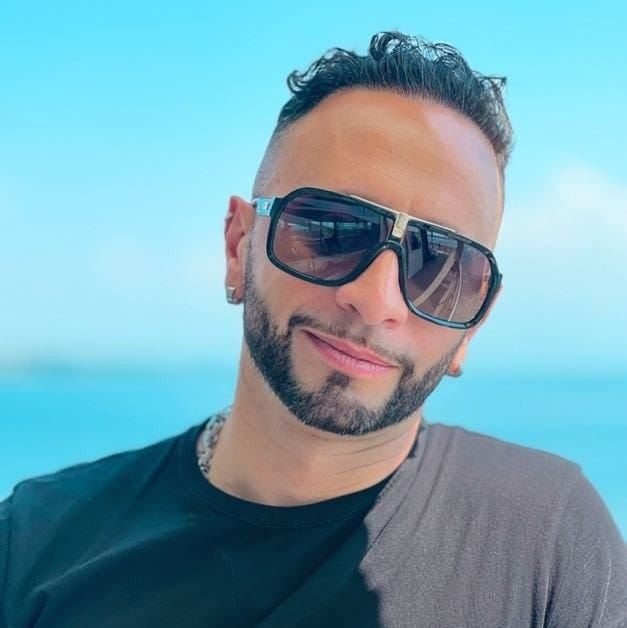
Grafts from the back of your head are placed at the nearly-flat angles facial hair grows at, filling patchy cheeks, thin goatee lines and scars. Done well, it disappears into the beard you already have. Done carelessly, it grows at the wrong angle forever — which is why angle is most of this page.
The technique, without the brochure gloss
Donor hair comes from the back of the head, selected for calibre similarity to beard hair, or occasionally from beneath the chin. Placement is by implanter pen: beard hair grows at angles close to the skin, and the pen’s control is what keeps new growth lying with the old.
Coverage is planned zone by zone — cheeks, moustache lines, the goatee-to-sideburn connections — matched to the density you already grow rather than to a stencil.
Honesty note: head hair and beard hair are not identical in texture. In a full beard the difference vanishes; in sparse stubble worn very short, a careful observer might notice a slight calibre difference. If you plan to wear heavy stubble forever, we’ll discuss expectations honestly first.
Step by step
- 1
Mapping the beard
Zones and direction are drawn with you in the mirror — beard direction changes across the face, and the map has to follow it.
- 2
Donor extraction
Grafts are taken from the nape and lower back of the head, where hair calibre best matches facial hair.
- 3
Angle-critical placement
The implanter pen places each graft at the acute, almost flat angle facial hair demands.
- 4
Blending check
Density and direction are checked against your existing growth before you leave the chair.
Who it suits
- Patchy cheeks that never filled in
- Thin or broken goatee and moustache lines
- Beard scars — acne, surgery, accidents
- Density boosts through an existing beard
Who it doesn't
- Expecting stubble-length invisibility under close inspection — texture match has limits
- Active skin conditions in the beard area (treat first, transplant after)
The honest limitation
The face shows healing more publicly than the scalp: expect visible redness dots for about a week, and plan your calendar around it. Transplanted beard hair must also be treated like beard hair forever — it grows daily and needs trimming like the rest.
What the weeks actually look like
- 1Days 1–5
Small crusts at every graft site — the most visible phase, worth scheduling around.
- 2Days 5–10
Crusts clear; shaving is off-limits until we say otherwise.
- 3Week 2–3
Shock shed of the transplanted hairs. Expected.
- 4Months 3–9
Growth arrives; a beard fills faster than a scalp. First proper trim is a good day.
See real healing-stage photos in patient results — including the stages other galleries crop out.
All-inclusive, from €2,200
Typical cases 500–1,500 grafts, 2 hotel nights, transfers, interpreter and aftercare included. Larger full-beard builds quoted individually.
Included at this price
- Surgery with all hospital and theatre fees
- Hotel, breakfast and every transfer
- Interpreter and named coordinator
- Aftercare kit and 12 months of photo reviews
Asked about Beard
Yes — once fully healed, transplanted beard behaves like beard. Shave it, trim it, grow it out. The follicles are permanent; the styling is up to you.
The extraction is spread through the nape at densities that don’t read as thinning. With hair at normal length it isn’t visible; we show you exactly where it will come from at the design stage.
At normal stubble and beyond, yes. At very short stubble under close inspection, calibre differences between head and beard hair can be subtly detectable. We’d rather tell you that now than let a mirror tell you later.
Not sure this is your technique? Good.
Choosing a technique from a website is guessing. Send three photos and get a recommendation with the reasoning shown — including when the cheaper option is the right one.