Sapphire FUE
The modern standard — and the right answer for most heads.
Follicles are extracted one by one, and the channels that receive them are opened with sapphire blades. It handles everything from a receding hairline to a full crown-and-front rebuild, and it is the best value per graft of any technique we offer.
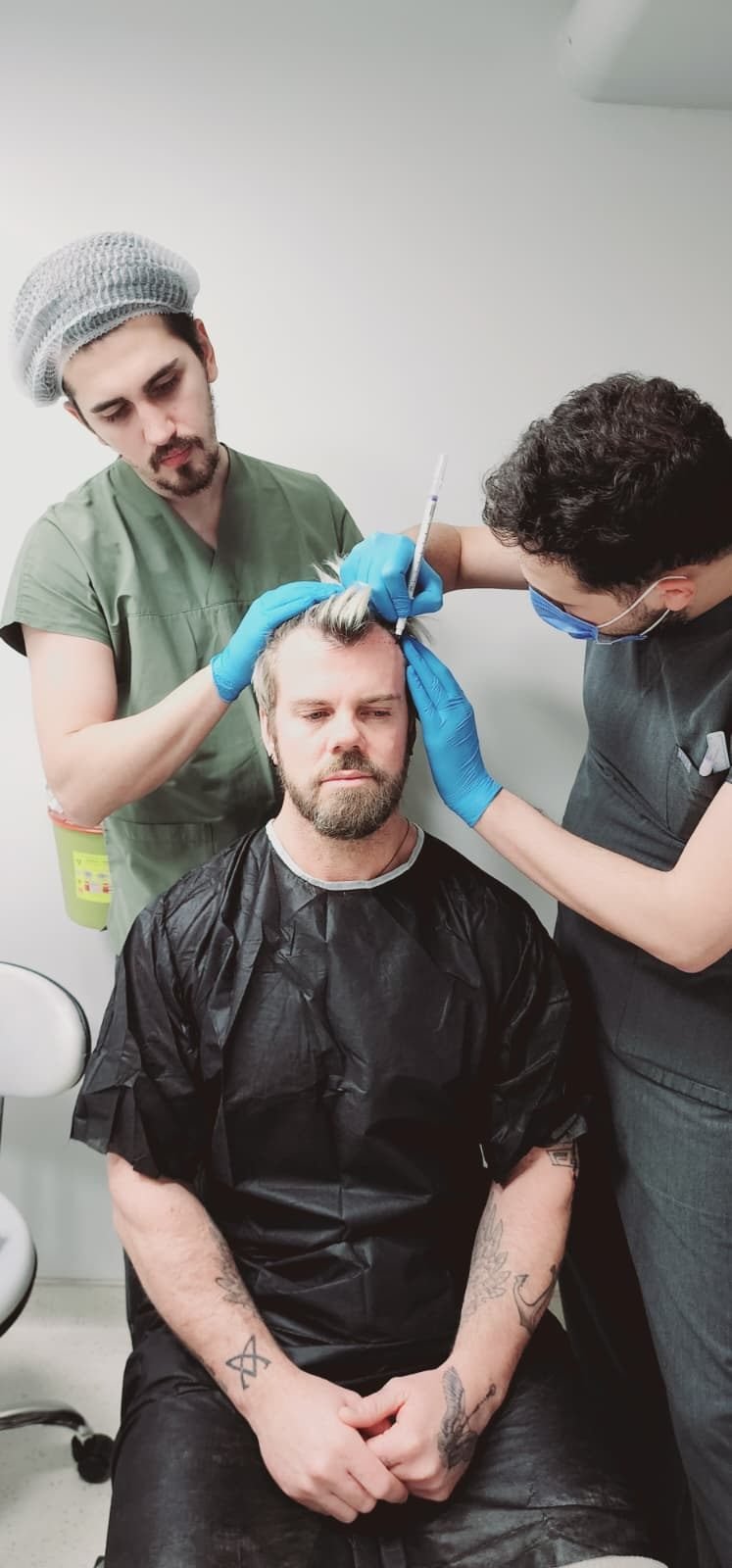
The technique, without the brochure gloss
FUE — follicular unit extraction — means each graft is removed individually from the donor area at the back and sides of your head with a micro-punch under a millimetre wide. No strip of scalp is cut out, no linear scar is left.
The “sapphire” part refers to the blades used to open the recipient channels: smooth sapphire tips that make smaller, cleaner incisions than steel. Smaller incisions mean less trauma per graft and somewhat faster surface healing.
Honesty note: sapphire blades are a genuine refinement, not a revolution. The skill of the hands setting each channel’s angle and depth matters far more than what the blade is made of — whatever the industry’s marketing implies.
Step by step
- 1
Shave and anaesthetic
The head is shaved and the donor area numbed. The anaesthetic injections are the least comfortable minutes of the whole day — after them, you feel pressure but not pain.
- 2
Extraction
Grafts are removed one by one and sorted by the number of hairs they contain — singles for the hairline edge, doubles and triples for density behind it.
- 3
Channel opening
Sapphire blades open each receiving channel at a set angle, depth and direction — the step that decides whether the result looks grown or planted.
- 4
Placement
Each graft is placed into its channel, hairline first. A final inspection checks density and angles against the agreed design before you leave.
Who it suits
- Most male pattern loss, from Norwood 2 to Norwood 6
- Large areas — crown and front in one plan
- Anyone comfortable with a full shave (it grows back with the result)
- Patients comparing value: the most grafts per euro of any option
The honest limitation
Because channels are opened first and grafts placed second, placement control at the hairline edge is marginally less fine than DHI’s implanter pen. For most patients this difference is invisible; for a hard case at the front hairline we may recommend combining both techniques — and we’ll say so at the quote stage, not in the chair.
What the weeks actually look like
- 1Days 1–3
Redness and micro-scabbing across the recipient area. First wash on day 3, taught in person.
- 2Days 4–14
Scabs lift and clear. Most patients pass without comment at work from day 10–14.
- 3Week 3–4
Shock loss: the transplanted hairs shed. Expected, universal, alarming if nobody warned you.
- 4Months 4–12
Real growth. Judge nothing before month 12 — that photo is the honest one.
See real healing-stage photos in patient results — including the stages other galleries crop out.
All-inclusive, from €2,650
Up to ~3,500 grafts, 2 hotel nights, transfers, interpreter and 12-month aftercare included.
Included at this price
- Surgery with all hospital and theatre fees
- Hotel, breakfast and every transfer
- Interpreter and named coordinator
- Aftercare kit and 12 months of photo reviews
Asked about Sapphire FUE
Slightly — smaller, cleaner incisions and marginally faster healing. But it is a refinement, not a different league. A mediocre team with sapphire blades loses to an excellent team with steel every time; choose the team, not the blade.
The anaesthetic injections sting for a few minutes. After that, the day is long but not painful — most patients watch films and doze. Expect soreness and tightness for a few evenings afterwards, managed with the medication in your kit.
First real growth around month four; visibly filling from month six; the result you keep at month twelve. Anyone promising visible density at three months is selling you a timeline that biology doesn’t honour.
Not sure this is your technique? Good.
Choosing a technique from a website is guessing. Send three photos and get a recommendation with the reasoning shown — including when the cheaper option is the right one.